07 October 2026
Why Social Justice T-Shirts Still Matter for Democracy Defenders
Presented by @otpljf2pdf
Wearing your beliefs on your chest is an old tradition, but it has never felt more urgent. In an era when every public square is also a digital battleground, the clothes we choose to wear can signal solidarity, provoke debate, or simply remind passersby that some fights are not over. For people who defend democracy, civil liberties, and free speech, a well-designed shirt does more than cover your torso. It becomes a piece of protest art, a conversation starter, and sometimes a shield.
I have been involved in grassroots movements for the better part of two decades. I have marched with signs, handed out pamphlets, and stood in the rain at rallies where the only sound was a bullhorn crackling. But the single most effective tool I have ever used to spark a real conversation was a simple cotton tee with a bold slogan. That is why I still believe in the power of political merchandise, especially when it takes the form of social justice t-shirts.
The Shirt as a Silent Megaphone
Think about the last time you saw someone wearing a shirt that made you stop and read. Maybe it was a clever phrase about voting rights or a graphic that skewered a politician. That moment of engagement is exactly what democracy defenders need. A shirt does not shout. It sits there, quietly, until someone decides to read it. That choice to read is a small act of curiosity, and from that small act, real dialogue can grow.
I have seen it happen at farmers markets, on subway platforms, and in coffee shops. A person wearing a shirt with a satirical design about corporate money in politics will attract glances, sometimes smiles, sometimes frowns. But rarely indifference. And indifference is the real enemy of social justice. When you break through that wall with a piece of activist apparel, you have already won half the battle.
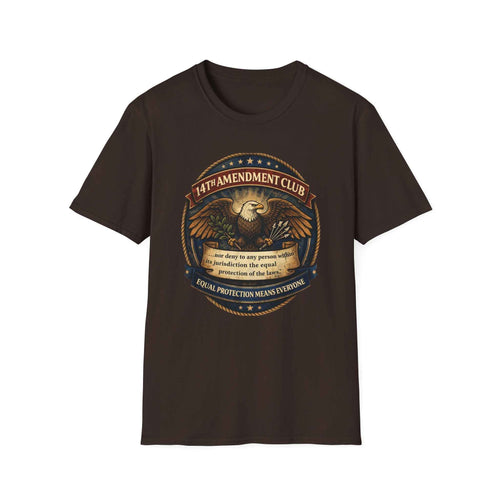
More Than Just a Slogan
Of course, not all statement tees are created equal. The best ones combine sharp wit with a clear message. Satirical design is especially effective because it disarms people. Laughter lowers defenses. When someone chuckles at a shirt that mocks a corrupt institution, they are also absorbing the critique. That is how protest t-shirts have always worked, from the antiwar movements of the 1960s to the climate strikes of today.
But there is a difference between a shirt that simply names an issue and one that actually moves people to action. The former might say "Climate Justice Now" in plain letters. The latter might show a polar bear on a melting ice floe holding a sign that says "My rent is due." That is the difference between information and invitation. The best political merchandise invites the wearer and the observer into a shared joke or a shared outrage. It creates a tiny community of recognition.
Where the Rubber Meets the Road
I remember a specific incident a few years ago. I was at a diner in a small town, wearing a shirt that referenced the First Amendment in a way that was both patriotic and pointed. A man in a MAGA hat sat down at the next table. We nodded at each other. He looked at my shirt, then back at me, then back at the shirt. For a long moment I thought we were headed for a confrontation. Instead, he asked, "What does that mean?" We talked for twenty minutes. We did not agree on much, but we both left the diner with a slightly more nuanced view of the other side. That shirt did not change the world, but it changed that ten-minute slice of it. That is the quiet power of social justice t-shirts.
Groups like the ACLU and the American Civil Liberties Union have long understood that visibility is a form of defense. When you wear a shirt that says "Defend Democracy" or "Free Speech Is for Everyone," you are not just expressing an opinion. You are signaling to others that they are not alone. That signal is especially important for people who feel isolated in their communities. A person wearing activist apparel in a conservative town might be the only visible sign of dissent for miles. That matters.
Design Matters, but Not in the Way You Think
Some people dismiss protest t-shirts as shallow consumerism. They argue that buying a shirt is not the same as doing the work. There is truth in that critique. No piece of political merchandise ever registered a voter or bailed someone out of jail. But the critique misses something essential. Wearing a shirt is not the end of activism. It is the beginning of a signal. It is a way of saying, "I am on your side," without using words. And for people who are tired, who have been fighting for years, that signal can be a lifeline.
The design itself matters less than the clarity of the message. A shirt with a confusing graphic or a slogan that requires a paragraph of explanation will fail. The best designs are instantly readable. They use bold slogans and simple imagery. They do not try to be clever at the expense of being understood. That is why satirical design works so well. It distills a complex issue into a single frame, often with a punchline. The punchline is what makes it stick.
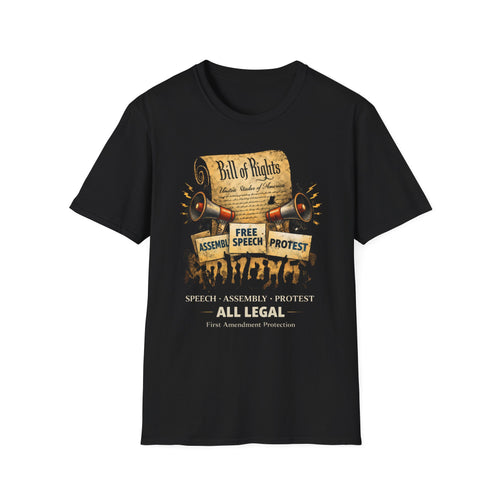
I have also noticed that the most effective shirts are the ones that take a stand without being purely negative. It is easy to make a shirt that says "I Hate [Politician]." It is harder to make one that says "I Believe in [Idea]." The best activist apparel tends to be affirmative. It defends something rather than just attacking something. That is why shirts from movements like Black Lives Matter often feature phrases like "Love Is the Resistance" or "Together We Rise." They are fighting against injustice, but they are also fighting for a vision of a better world.
The Role of Coffee and Community
Activism does not stop at the shirt. It extends into the spaces where people gather to plan, to rest, and to recharge. That is where activist coffee comes in. A cup of coffee is a small ritual, but it can also be a statement. When you buy coffee from a company that supports democracy defenders, you are voting with your wallet. The same logic applies to shirts. Every purchase of political merchandise is a vote for the kind of world you want to live in.
I have been to countless meetings where the only things on the table were a stack of flyers and a pot of coffee. Those meetings built movements. They also built friendships. The people who show up are the same people who wear protest t-shirts on weekends and who donate to the ACLU when they can. They are the backbone of grassroots movements. They do not need a shirt to tell them what to believe, but the shirt helps them find each other.
A Few Practical Notes for the Conscious Consumer
If you are thinking about buying a shirt that makes a statement, here are a few things I have learned over the years.
- Quality matters. A cheap shirt that fades after three washes sends the wrong message. Look for durable fabric and strong print.
- Read the room. A shirt that is perfect for a protest might not land well at a family dinner. That does not mean you should not wear it, just that you should be ready for the reaction.
- Think about longevity. A shirt tied to a specific election or event might feel dated in a year. A shirt about free speech or civil liberties will stay relevant.
- Support brands that align with your values. Companies like Rise and Revolt exist specifically to serve democracy defenders. They understand the audience and the mission.
I have owned shirts that lasted a decade and shirts that fell apart in a season. The difference is usually in the construction, not the message. But the message is what makes you wear it. A good shirt becomes a part of your identity. It is a uniform of sorts, but a voluntary one. You choose to wear it because it says something you believe.
The Bigger Picture
Some people worry that wearing a shirt is a substitute for real action. It can be, if you let it. But for most people I know, the shirt is just one tool in a larger kit. They also volunteer, donate, vote, and show up. The shirt is the visible part of an invisible commitment. It is a flag you fly on your body.
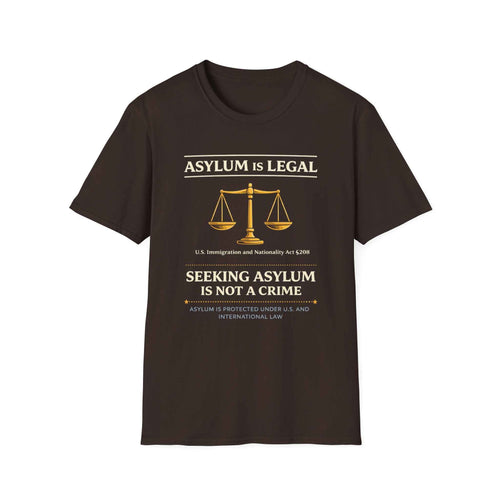
In a time when free speech is under pressure from many sides, the simple act of wearing a statement can feel like a small rebellion. And it is. But it is also a way to connect with others who share your values. That connection is the real power of social justice t-shirts. They are not magic. They are just cotton and ink. But when you wear one, you are telling the world that you are paying attention, that you care, and that you are ready to defend what matters.
So go ahead. Wear the shirt. Drink the coffee. Join the movement. Democracy depends on people who are willing to stand up and be counted, even if all they are wearing is a piece of protest art.